
Essential Trends Defining the Future of Biotech Web Design
If you’ve spent any time in the life sciences space lately, you know that the “speed of science” has taken on a whole new meaning. It wasn’t that long ago that a biotech website was essentially a digital brochure—a static place to park a PDF. However, as we look toward the future of biotech web design, these sites are evolving into dynamic tools for storytelling and investor engagement.
But as we move into 2026, the digital landscape for biotech has shifted in a big way. At Axxiem, we’re seeing a major move away from those “cookie-cutter” templates toward websites that are as innovative as the science they represent. Whether you’re looking to catch an investor’s eye before a major conference or trying to make complex data accessible to potential partners, here are the key trends shaping biotech web design this year.
High-Performance “Data Storytelling”
In years past, data was often hidden away in static tables or complex charts that were notoriously difficult to read, especially on a mobile device. In 2026, the trend has pivoted toward interactive data storytelling.
Instead of a simple image of your clinical trial results, modern sites are using “explorable” charts. This allows a user to hover over a data point to see specific metrics or toggle between different phases of a study. This helps your audience digest complex information quickly, making your science feel more transparent and accessible. It’s about giving the user control over how they consume your most important evidence. When an investor can interact with your data, they engage with your story on a much deeper level than they would with a static PDF.
Immersive Visuals: Show, Don’t Just Tell
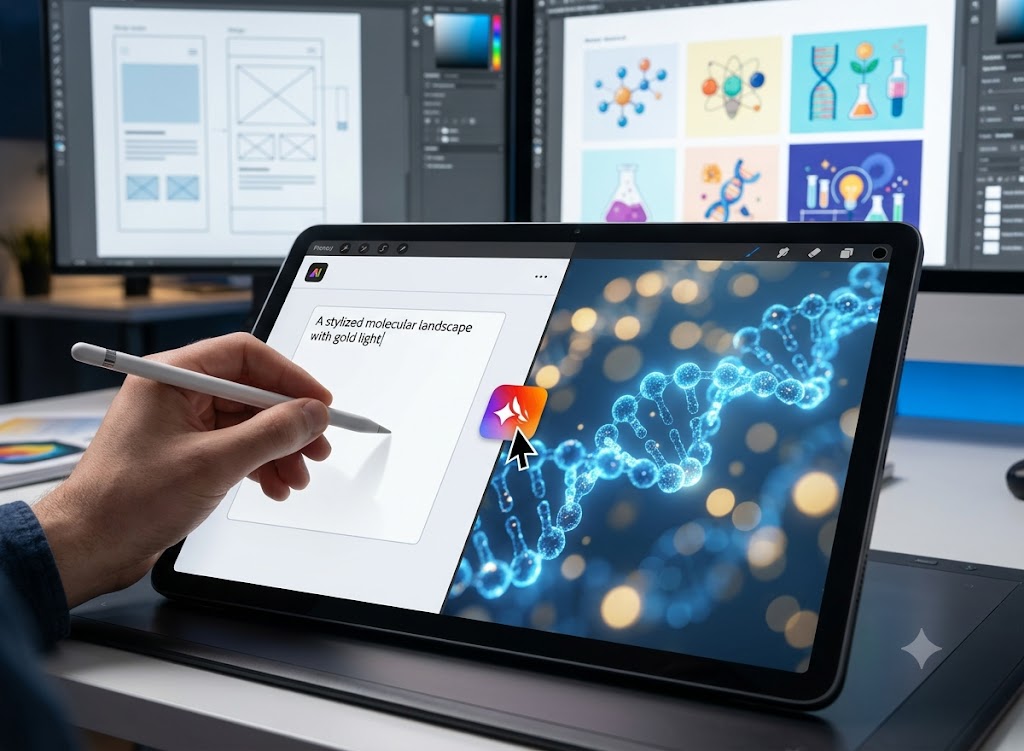
Biotech is inherently complicated. Explaining a novel protein degradation platform or a gene-editing tool in a paragraph of text is a tall order. This year, we’re seeing a massive rise in 3D visuals and “scrollytelling”—a method where the story unfolds as the user scrolls down the page. Using scrollytelling to explain complex mechanisms is a hallmark of the future of biotech web design, as it turns passive readers into active participants.
Imagine a visitor landing on your site and, as they scroll, a 3D molecular model rotates or “unfolds” to reveal exactly how a drug interacts with a specific cell receptor. It’s not just about aesthetics; it’s a functional way to turn abstract concepts into something tangible. It builds immediate credibility because it shows that you understand your science well enough to visualize it clearly for the world. It removes the guesswork for your visitors and leaves a lasting impression that text alone simply cannot match.
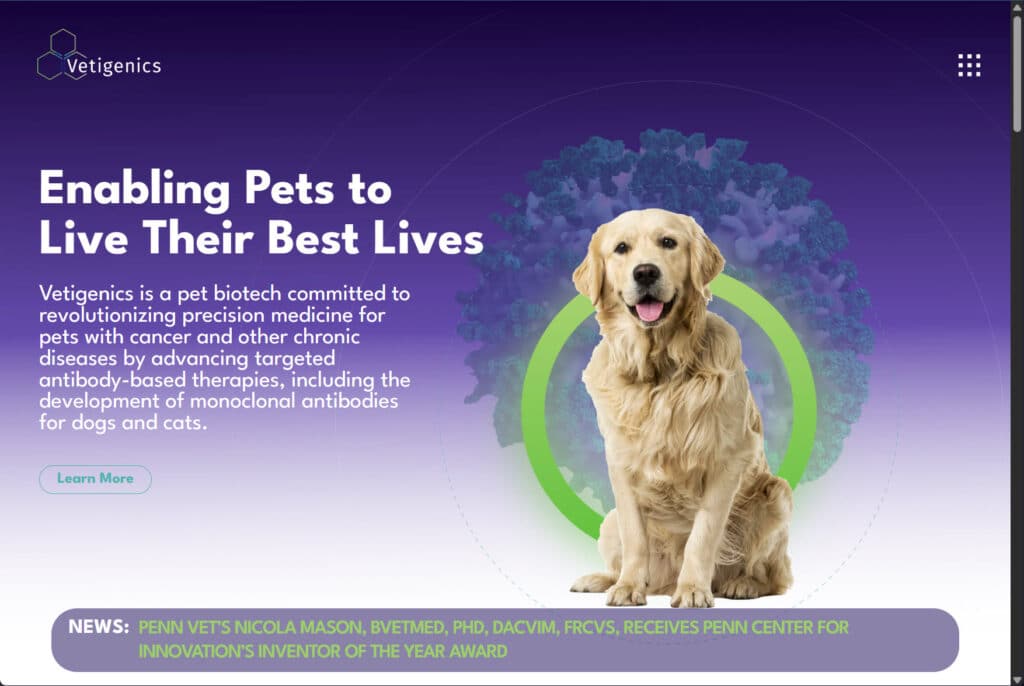
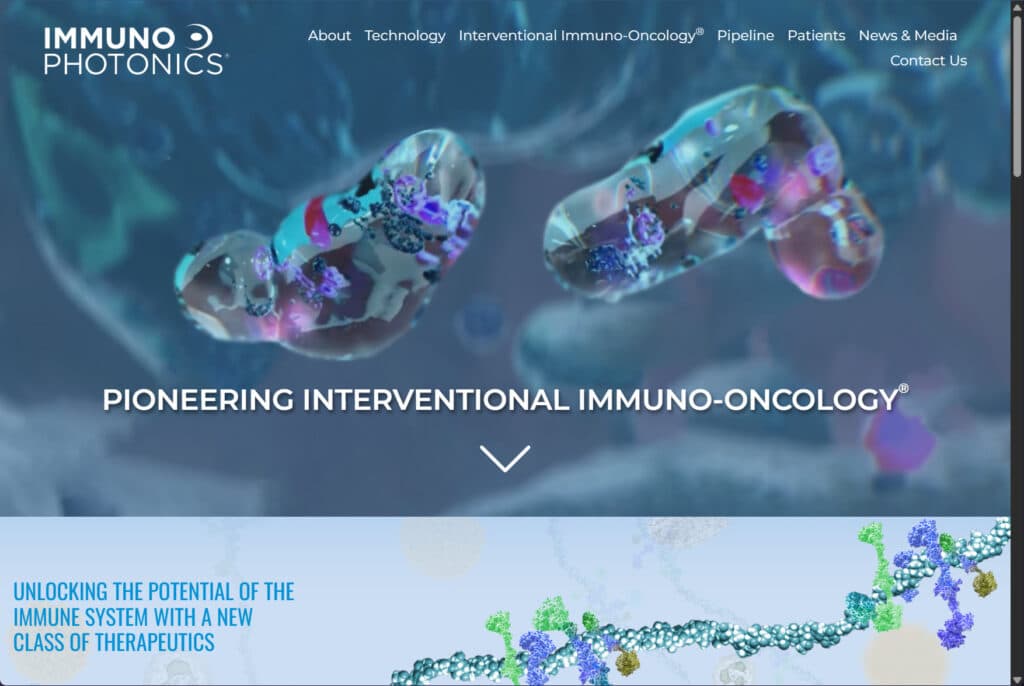
We have seen this approach work wonders for our clients. For instance, our work with Vetigenics uses scrollytelling to guide visitors through their unique antibody discovery platform, while the Immunophotonics project demonstrates how complex therapeutic mechanisms can be made intuitive through guided navigation and movement.
The End of Stock Photo Fatigue
We’ve all seen the same photo of a scientist staring at a blue liquid in a test tube. In 2026, that just doesn’t cut it anymore. Authenticity is the new gold standard for building trust with sophisticated audiences.
Biotech firms are now opting for:
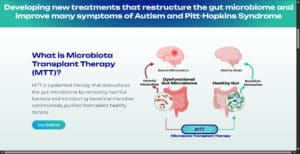 Custom Scientific Illustrations: Unique graphics that match your brand’s specific color palette and style. These help define your visual identity and make your platform look proprietary. Our work with Gut-Brain Axis Therapeutics is a prime example of how bespoke illustrations can clarify complex biological pathways while maintaining a high-end brand feel.
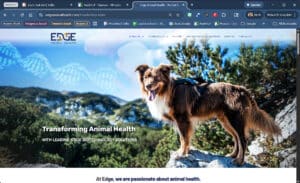 Authentic Team Imagery: Real shots of your lab, your team, and your culture. Investors aren’t just funding molecules; they are funding the brilliant minds behind them. Seeing the actual environment where the magic happens builds a human connection. Projects like Edge Animal Health show how powerful it is to feature the actual faces and facilities behind the science.
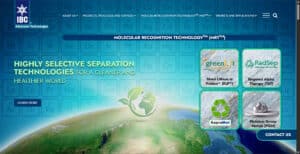 Micro-interactions: Small, thoughtful animations that make the site feel high-tech and “alive.” Whether it is a button that subtly reacts when you hover or a progress bar that tracks with your scroll, these details signal quality. Our work for IBCMRT showcases how these sophisticated micro-interactions create a seamless, professional user experience that reflects the precision of the science itself.
Designing for “AI Discovery” (The New SEO)
The way people find information has fundamentally changed. People aren’t just typing keywords into Google anymore; they’re asking AI assistants for summaries of “the top oncology startups” or “leaders in CRISPR technology.”
To stay visible, biotech websites in 2026 need to be built with structured data. At Axxiem, we’re focusing on “Answer-Driven” design—organizing your content so that both humans and AI models can easily find and accurately summarize your value proposition. If an AI assistant can’t understand your site’s architecture, your potential partners might not find you at all. We make sure your site speaks “machine” as well as it speaks “human,” ensuring you show up in those all-important AI-generated summaries.
Investor-First Navigation
 Investors are busier than ever, and their attention spans are shorter than ever. The trend for 2026 is High-Efficiency Navigation. This means having a “Clinical Pipeline” that isn’t buried three clicks deep in an “About Us” section.
We’re using “accordion” designs and interactive charts that allow users to see a high-level overview or “drill down” into the details without ever leaving the page. For example, our project for Nerviano Medical Sciences features a pipeline that opens in an accordion style, allowing users to dive deeper into specific clinical assets with a single click. The goal is to get an investor the “Proof of Concept” they need in less time. If they have to hunt for your lead candidate, you run the risk of losing their interest before they even see your data.
Accessibility as a Design Standard
Inclusive design is no longer an afterthought or a “nice-to-have” feature. In 2026, biotech sites are leading the way in accessibility. This means high-contrast modes, screen-reader optimization, and simplified layouts that ensure your science is reachable by everyone. Prioritizing inclusive UX ensures that the future of biotech web design remains focused on the humans behind the data.
Whether someone is navigating via a mobile device in a busy airport or using assistive technology in a quiet office, your mission should be crystal clear. It’s about making sure your breakthrough is heard and understood by the widest possible audience. In a field dedicated to improving human health, making your digital presence accessible to all humans is just good practice.
The common thread for 2026 is clarity. Your website shouldn’t be a barrier between your science and your audience; it should be the bridge. By embracing these trends and understanding the future of biotech web design, you’re not just making a “pretty” website—you’re building a powerful tool that drives investment, partnerships, and growth.
At Axxiem, we love helping life science companies find that perfect balance between “high-tech” and “human.” The future of biotech web design is looking bright, and we are excited to help you tell your story in a way that resonates.
Want to see how these trends could look for you? Let’s chat!